From the Sidelines · Ask Dr. G
Cortisone vs. PRP: Two Shots, Two Jobs
Cortisone quiets inflammation fast. PRP supports the tissue's own repair over weeks. They are not two versions of the same thing - the diagnosis decides.
Ask Dr. G
Q: "My shoulder has been aching for months. One doctor mentioned cortisone, another mentioned PRP. They sound like two versions of the same thing. How am I supposed to decide?" - Dave R., Tarrytown, N.Y.
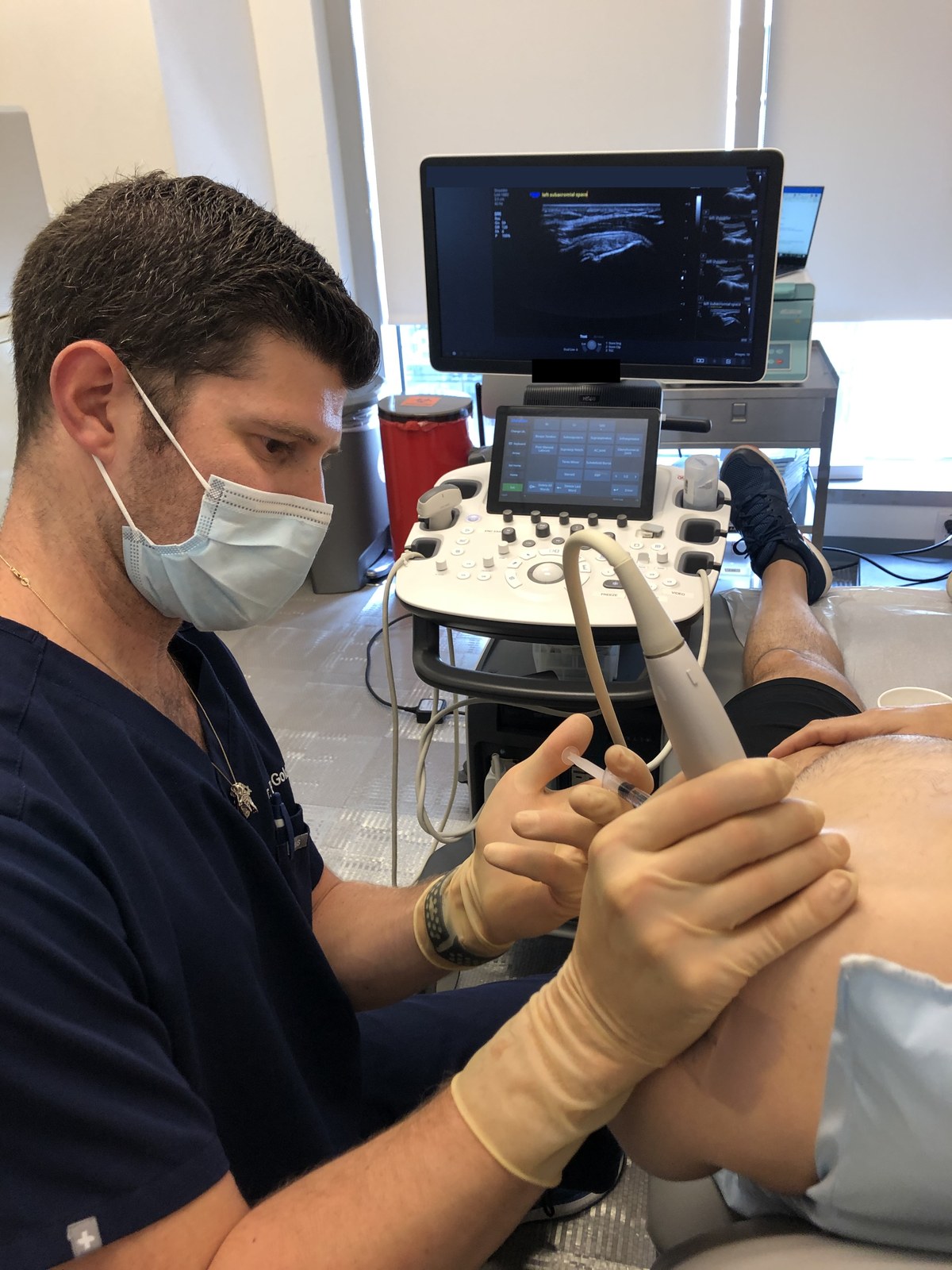
Dave, they are not two versions of the same thing - and that is exactly why the choice feels confusing. They do different jobs. Cortisone quiets inflammation fast. Platelet-rich plasma tries to support the tissue's own repair over weeks. Neither is "the better shot" in general - the right choice depends on what's hurting, how long it's been hurting, and what you need to do next.
Start with cortisone. It is a powerful anti-inflammatory steroid. Injected into a joint or around a tendon, it turns down the inflammation driving the pain, often within days. For a hot, swollen joint or a bursitis that flared up this week, that can feel like a switch being flipped.
But cortisone doesn't rebuild anything. Repeated shots in the same spot can weaken tendons and soften cartilage over time, which is why most physicians space them out and limit how many you get in a year. Think of cortisone as a fire extinguisher: excellent for putting out a fire, not a tool for rebuilding the house.
Platelet-rich plasma (PRP) comes at the problem from the opposite direction: it is a small amount of your own blood, spun to concentrate the platelets, then injected where the tissue is struggling. The platelets carry signaling molecules that encourage the tissue's repair process. It works slowly - any benefit usually shows up over weeks, not days - and the first few days after the shot can feel a little worse before they feel better. PRP's best evidence is in chronic tendon problems that haven't responded to rehab, and in some knee arthritis. For a brand-new, hot, inflamed problem, it is usually not the first tool a physician reaches for.
So how do you decide? It comes down to four questions. First, is this new or old? A fresh flare with swelling and heat leans toward calming things down first. A problem that has been nagging for months despite rehab leans toward supporting repair. Second, what tissue is it? A swollen joint or an inflamed bursa responds differently than a worn tendon - the diagnosis matters more than the menu of injections. Third, what does the calendar say? If you need to get through a tournament next week, fast relief has real value. If you have months and want to address the underlying problem, the slower option may make more sense. And fourth, what have you already tried? An injection is not a substitute for rehab. If the muscles around the joint are weak or the movement pattern is off, no shot fixes that on its own.
There is also a practical word on cost and hype. Cortisone is usually covered by insurance and costs little out of pocket. PRP typically is not covered, and prices vary widely. Cost should never be the only factor, but it is fair to ask what the evidence says it buys you for your specific problem.
One caution before either shot: some presentations are not injection problems at all. See a physician before either shot if a joint is hot, red, and swollen out of nowhere, if you have a fever with joint pain, or numbness or weakness after a real injury rather than a gradual ache. Those are different problems, and an injection is not the first step.
So, Dave, here is the bottom line: don't pick a shot - pick a diagnosis, then match the tool to it. Cortisone calms a flare; PRP supports a stalled repair. Ask your physician which problem you actually have, and the choice usually makes itself.
Elan Goldwaser, DO, is an Assistant Professor of Orthopedic Surgery at Columbia University in New York City, where his practice focuses on sports medicine and orthobiologics.
Have a question about injections you'd like covered in a future post? Send it to Ask Dr. G. Reader questions shape what I write next.
For education only - not medical advice.
Next step
Want a personal evaluation?
From the Sidelines is educational. For care, reach the practice directly.