Orthobiologics
Biology as one option, never the whole plan.
Orthobiologic procedures use material from your own body to support the treatment of tendon, joint, and soft-tissue conditions. They belong inside a complete plan built on diagnosis, imaging, rehabilitation, and honest expectations.
The options
Four preparations, each with a different job.
These treatments are not interchangeable. The tissue involved, the diagnosis, prior care, health history, and goals all shape whether any of them belongs in the conversation.
Platelet-rich plasma
What it is: A preparation made from a patient’s own blood. Processing concentrates platelets and their signaling proteins before the material is placed at a specific target.
How to think about it: Formulations vary widely. The diagnosis, platelet dose, injection target, and rehabilitation plan matter more than the acronym alone.
Microfragmented adipose tissue
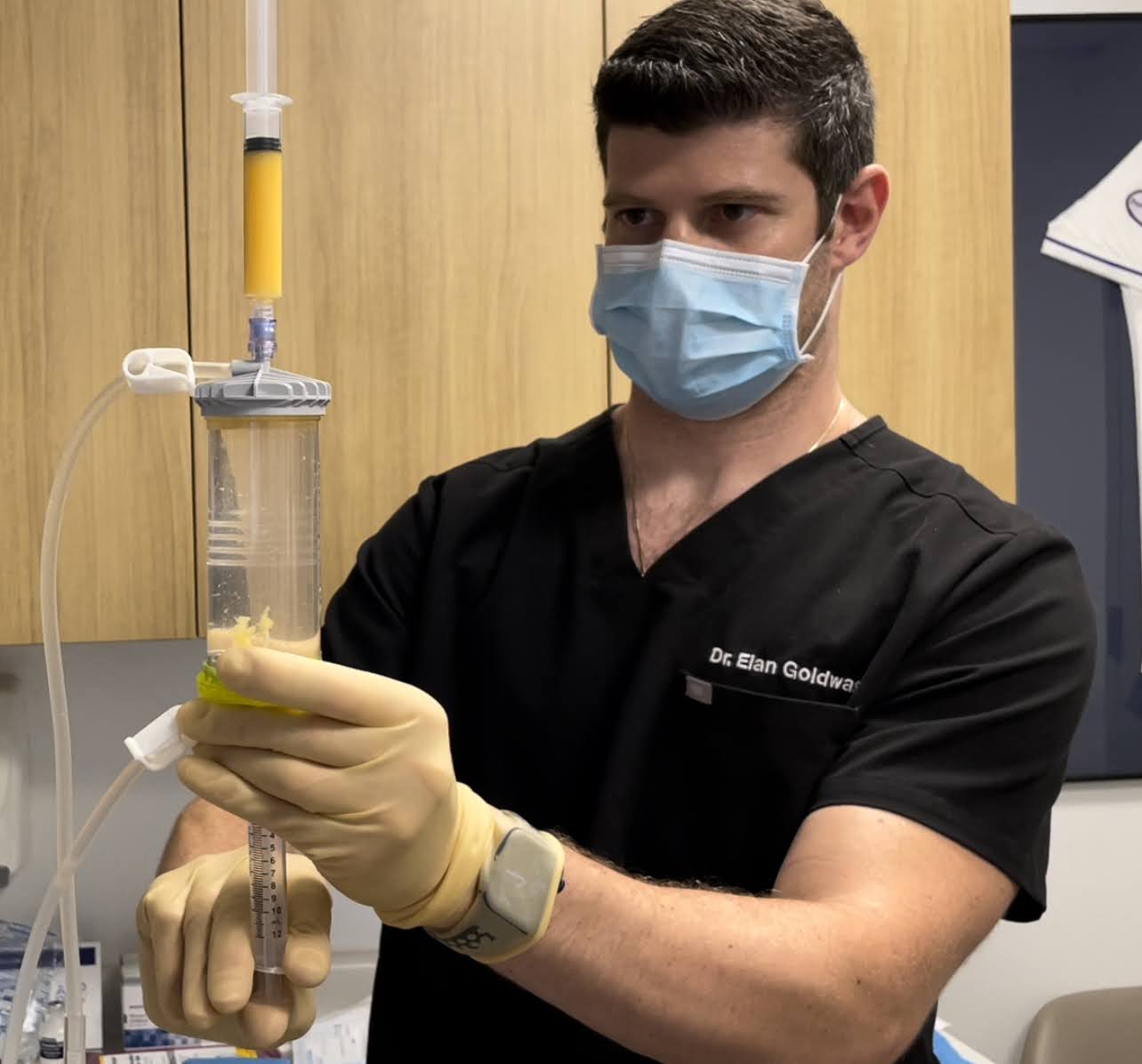
What it is: A patient’s own adipose tissue, gently processed in a closed system into smaller tissue fragments. The tissue retains structural and signaling components, including mesenchymal signaling cells.
How to think about it: This is a tissue-based procedure, not a promise of tissue regrowth. Suitability depends on the condition, the goals of the procedure, and a careful discussion of the evidence and alternatives.
Alpha-2-macroglobulin
What it is: A naturally occurring blood protein that can be concentrated from a patient’s own blood as part of an autologous protein solution.
How to think about it: It is discussed for its protein-binding role, but the evidence varies by condition. Marketing language should never substitute for diagnosis-specific data.
Bone marrow aspirate concentrate
What it is: Material collected from a patient’s bone marrow and concentrated to retain platelets, growth factors, and marrow-derived cells.
How to think about it: Cell counts and preparations vary. It should be evaluated as one procedural option within a complete treatment and rehabilitation plan.
How candidacy is decided
The diagnosis comes first, and the procedure earns its place.
A useful recommendation starts with the diagnosis and the tissue being treated, then weighs the available evidence, medical history, alternatives, recovery demands, cost, and the patient’s goals.
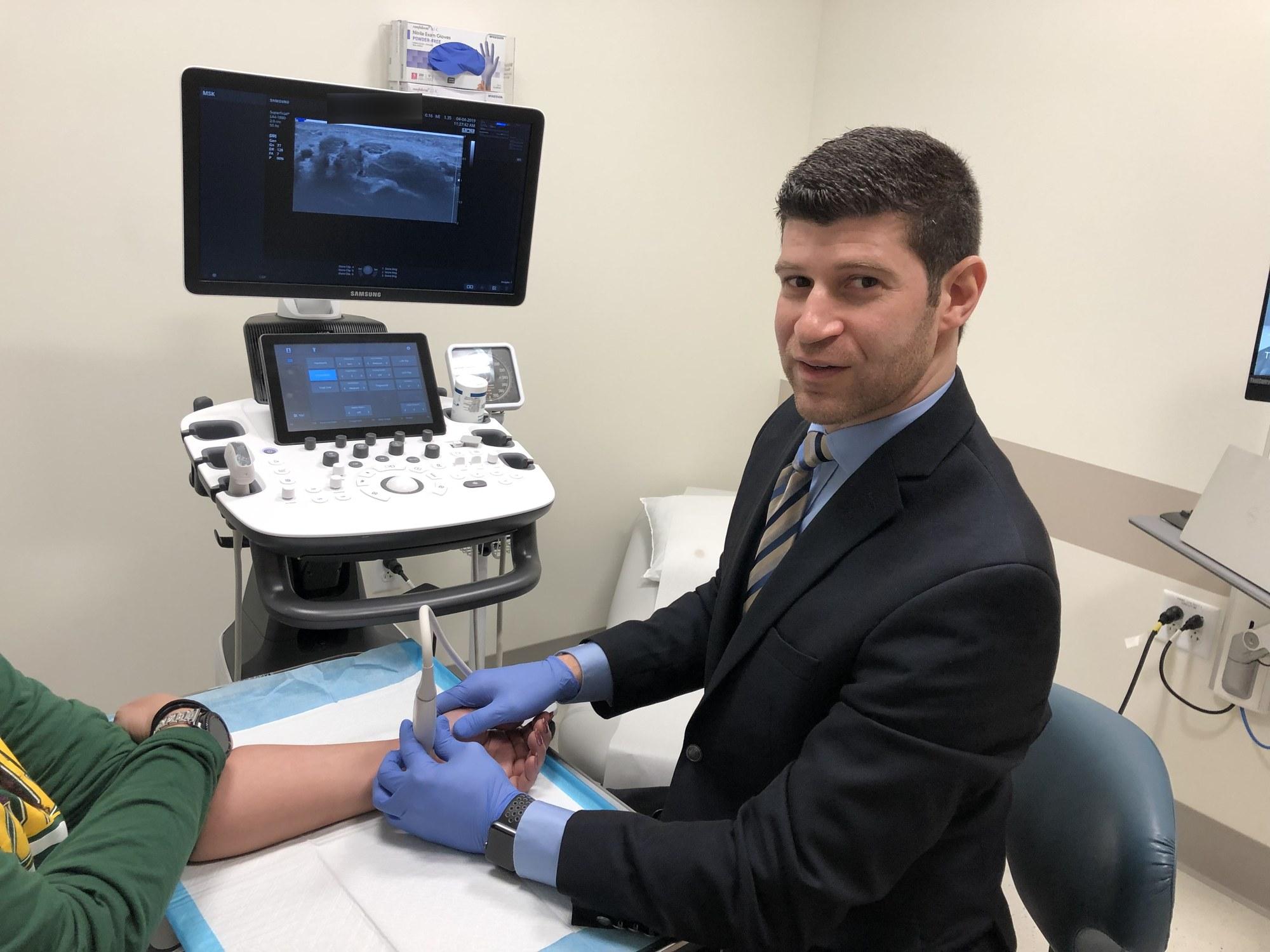
- Dynamic ultrasound assessment before any intervention
- Procedure selection matched to tissue and objective
- Recovery milestones coordinated with rehabilitation
- Candid guidance when an intervention is not the right choice
Honest answers
Questions worth asking before any biologic procedure.
Which option is “best”?
There is no universal winner. The right question is which preparation, if any, fits your diagnosis, your tissue, and your goals.
Are these procedures guaranteed to work?
No. Response varies, and no biologic procedure can promise pain relief, tissue restoration, or a return to sport. A responsible consultation covers expected benefit, uncertainty, risks, alternatives, and the possibility that a procedure is not the right choice.
Are these treatments the same as cortisone?
No. Corticosteroid injections and autologous biologic procedures use different materials and have different goals, risks, and evidence profiles. The appropriate choice depends on the diagnosis and clinical context.
What should I ask during a consultation?
Ask what diagnosis is being treated, why a specific preparation was selected, what evidence supports it for that condition, what the alternatives are, what recovery requires, what it costs, and how progress will be measured.
General education only. This page does not diagnose a condition or recommend a treatment. Discuss your situation, medication use, risks, and alternatives with your own physician.