From the Sidelines · Ask Dr. G
Torn Does Not Mean Surgery
An MRI report says torn meniscus. That does not automatically mean surgery - where the tear sits and what shape it takes decide whether it can heal, settle with therapy, or needs repair.
Ask Dr. G
Q: "I am 47 and I twisted my knee getting out of a pickup game last month. It ached on the inside, swelled up that night, and it still catches sometimes when I turn. An MRI report says I have a torn meniscus. Does torn automatically mean I need surgery, and can a meniscus tear heal on its own?" - Dave M., Albany, New York.
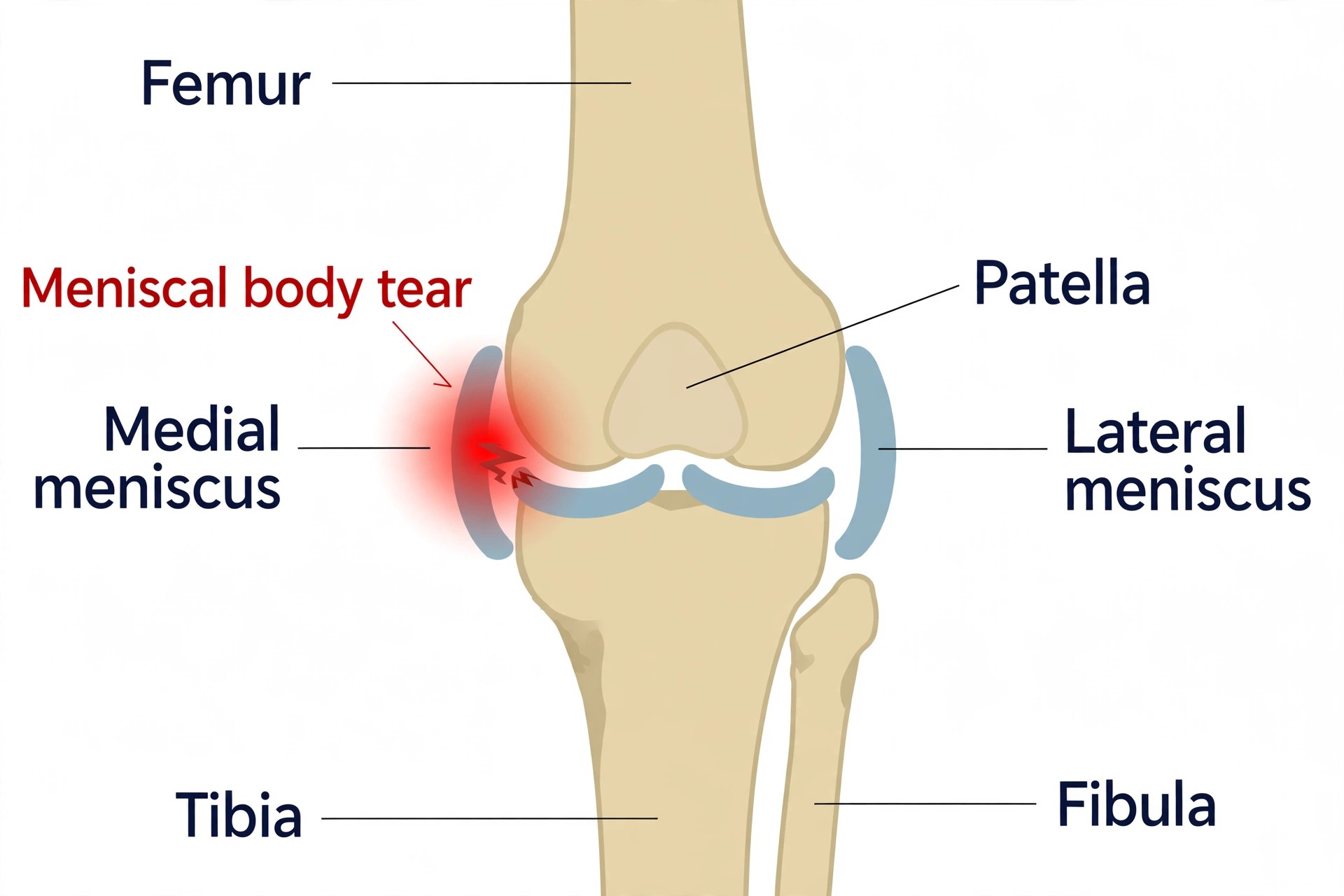
Dave, torn does not automatically mean surgery - and yes, some meniscus tears do heal, or settle down enough that you forget they are there. Which path yours takes depends on where the tear sits, what shape it takes, and what your knee does day to day.
Start with what the meniscus is. You have two in each knee, medial on the inside and lateral on the outside. Each is a C-shaped piece of tough cartilage between the thigh bone and the shin bone. Think of it as a cushion and a load spreader at the same time. It absorbs shock, spreads your weight so the joint cartilage does not take it all in one spot, and helps keep the knee stable.
Tears happen two main ways, and the difference matters. In younger athletes, a tear is usually traumatic - one clear event, like your twist in that pickup game, often with the foot planted and the knee rotating. In adults in their 40s and beyond, tears are more often degenerative. The tissue has thinned over years of use, and an ordinary twist or squat can be the final straw. Here is the part that surprises people: many degenerative tears show up on MRIs of knees that do not hurt at all. An MRI finding is information, not a verdict.
Location is the biggest reason some tears heal and others do not. The outer edge of the meniscus has a real blood supply. The inner edge has almost none. Blood is how tissue repairs itself, so a tear near the rim - the red zone - can heal, especially if it is small and stable. A tear deep in the inner portion, the white zone, gets little blood flow and rarely heals. Pattern matters too. A short, stable tear may quiet down on its own. A large flap, or a displaced bucket-handle tear where a chunk flips into the joint, is a mechanical problem that time and exercises rarely fix.
So what does a reasonable first plan look like? If the knee is not locked, most people start by calming it down and rebuilding it. Back off the twisting, pivoting, and deep squatting that provoke it for a few weeks. Ice after activity and a short course of an anti-inflammatory medicine, if your clinician says it is safe for you, can help with pain and swelling. Then physical therapy does the heavy lifting: restoring motion, getting the swelling out, and strengthening the quads, hips, and hamstrings so the muscles take back work from the injured cushion. Give it a fair trial - often six to twelve weeks. Many tears become pain-free working knees on that plan, even if the tear still shows on a repeat scan. A healed-feeling knee is the goal, not a perfect picture.
Some knees should not wait out that trial, and yours has one symptom worth respecting: catching. Get in promptly if your knee locks - meaning it gets stuck and will not fully straighten - or if it catches repeatedly, swells again and again after activity, gives way under you, or keeps hurting along the joint line despite a solid block of therapy. A truly locked knee is the closest thing to urgent on this list, because a displaced piece of meniscus can be physically blocking the joint. In the office, expect an exam of your motion, joint line, and stability, and a review of that MRI alongside your symptoms - not instead of them. When surgery does come up, it generally takes two forms: repairing the tear with stitches, which preserves the cushion and suits tears in the well-supplied outer zone, or trimming out only the torn, unstable piece. Preserving meniscus matters, because knees that lose a lot of it tend to wear out faster - one more reason a tear that can settle deserves the chance.
Elan Goldwaser, DO, is a team physician for U.S. Ski & Snowboard and an Assistant Professor of Orthopedic Surgery at Columbia University in New York City.
Have a question? Send it to Ask Dr. G.
For education only - not medical advice.
Next step
Want a personal evaluation?
From the Sidelines is educational. For care, reach the practice directly.